The Risks and Realities of Anesthesia-Free Dentistry for Pets
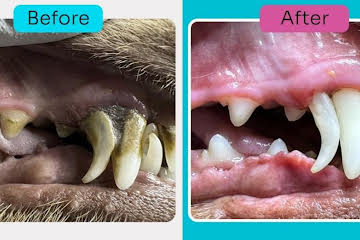
Anesthesia-free dentistry for pets sounds appealing, but this service doesn’t deliver on its promise. Instead, studies show it provides no medical benefit and may put pets at risk.
Here’s a closer look at the darker side of anesthesia-free dentistry and why dental care under anesthesia is the only type endorsed by major veterinary organizations and remains the standard of care at our animal hospitals.
What is anesthesia-free dentistry for pets?
Anesthesia-free or non-anesthetic dentistry is the removal of plaque and tartar from a pet’s teeth while they are awake. Although it is advertised as a “safe” and “pet-friendly” alternative to veterinary dental cleanings under anesthesia, it does not provide effective or appropriate care.
Why is anesthesia-free dentistry inappropriate for pets?
National and international veterinary organizations oppose anesthesia-free dentistry for pets for many reasons.
Not performed by a licensed veterinarian
While anyone can look at a pet’s teeth and see visible yellow or brown tartar, only a licensed veterinarian can diagnose and grade periodontal disease (dental disease) and other oral problems, such as gingivitis, fractured teeth, or resorptive lesions. Anesthesia-free dentistry is often performed by non-veterinary personnel who lack the training and expertise needed to provide this important service.
Prevents accurate diagnosis
Diagnosis of oral and dental pathology requires a thorough oral examination, reviewing every area of your pet’s mouth, both above and below the gumline. This includes:
- Complete oral examination
- Charting
- Dental probing to measure pockets and grade disease
- Digital dental X-rays
Anesthetic-free dentistry focuses on visible tartar (calculus), which does not actually contribute to dental disease. Instead, dental disease develops below the gumline, quietly progressing until significant infection and dental problems are present. Since anesthesia-free dentistry is limited to a visual exam and cleaning of the tooth’s surface, significant dental problems go undiagnosed.
Provides limited cleaning
Anesthesia-free dentistry is cosmetic. This means that only the visible parts of the tooth are cleaned and polished. While teeth look better from the outside, plaque-related bacteria continue to multiply and thrive below the gumline. This leads to worsening disease, pain, and injury.
Only veterinary dentistry under anesthesia includes subgingival scaling to safely remove damaging bacteria below the gumline.
Presents risks to the patient
Many pet parents choose anesthesia-free dentistry because they worry about anesthetic risks. However, anesthesia-free dentistry has its own dangers, including:
- Sharp instruments: Scalers and other handheld tools can easily poke or cut sensitive oral tissue when pets move or flinch, causing injury, bleeding, and pain.
- Aspiration of fluid: Without an endotracheal tube to protect their airway, pets can inhale oral rinses, saliva, and other bacteria-rich fluids into their lungs.
- Incomplete exam: Because it’s difficult to see the pet’s entire mouth, personnel may not notice potentially cancerous tumors, abscesses, tooth resorption, or an oral fistula. These and other problems are readily identified during an anesthetic exam.
- Emotional distress: An awake dental cleaning can be scary for pets, who may be sensitive about their mouth and muzzle and not want to stay still for prolonged periods.
May worsen periodontal disease
Without X-rays, pets who receive anesthesia-free dentistry instead of dental care under anesthesia may go longer without proper treatment and interventions. This can worsen disease and chronic pain and lead to more extensive, costly care later on.
Additionally, if the teeth are not properly cleaned, tartar can reaccumulate more quickly, requiring more frequent cleaning.
Recommended dental care at Tampa Bay Animal Hospitals
The only proven and effective way to care for your pet’s oral health and prevent or treat periodontal disease is comprehensive dental cleaning, full-mouth dental X-rays, and care under anesthesia.
Anesthesia safety
Although many pet parents worry about their pet’s safety under anesthesia, general anesthesia is relatively safe. In a recent study, the overall anesthetic-related death rate was only 0.05% in sick or healthy dogs and 0.11% in cats.1 These numbers are even lower when pets receive pre-anesthetic assessments (exams and testing), personalized anesthetic protocols, pain management, and continuous monitoring, which are standard at our animal hospitals.
Full-mouth dental X-rays
Dental X-rays increase diagnostic accuracy by 40%, ensuring the detection of hidden changes such as tooth resorption, infection, and bone loss.1 In addition, X-rays help monitor your pet’s oral health over time and ensure complete removal of tooth roots after extractions.
Complete oral exam and charting
Detailed records allow the veterinary team to document and track any oral findings. This informs future care and timely treatment.
Deep cleaning
Subgingival scaling and polishing with precise veterinary instruments allows the veterinary team to remove harmful bacteria above and below the gumline. This is performed on every aspect of the tooth’s surface, including hard-to-reach areas. Polishing removes microabrasions on the tooth’s surface, which can speed re-attachment of plaque and tartar.
Advanced procedures (tooth extractions and more)
When indicated by exam findings or dental X-rays, your pet’s veterinarian can perform necessary advanced care, including tooth removal (extraction), tissue biopsy, and other procedures.
This eliminates the need for a second anesthetic event and ensures pets receive timely treatment and pain relief.
A deeper commitment to dental health
On the surface, anesthesia-free dentals sound like a promising alternative to traditional veterinary recommendations. But with no proven medical benefit and known risks including physical injury, emotional distress, inadequate cleaning, and worsening disease, it is easy to see why it’s not a suitable alternative to comprehensive dental care under anesthesia.
If you have questions about your pet’s dental health, our recommendations, or our commitment to anesthetic safety, our team is happy to help. Contact us for more information.
Source: 1. Niemiec, Brook A et al. “Anesthesia-free dentistry does not provide any demonstrable medical benefit for the control of periodontal disease in dogs.” Journal of the American Veterinary Medical Association vol. 264,2 1-7. 29 Oct. 2025, doi:10.2460/javma.25.06.0405
- Behavior (15)
- Caring for your pet (301)
- cat (24)
- Community Events (20)
- dog (25)
- From Our Clients (15)
- Happy Tails (13)
- News (465)
- Press (53)
- Products (2)
- Questions (4)
- Recalls (1)
- Special Offers (6)
- Tips & Advice (232)
- Uncategorized (21)
- Veterinary Services (50)
