Canine Wellness Guidelines
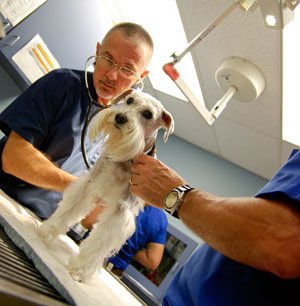
Comprehensive Physical Examination by the Veterinarian
The Comprehensive Physical Examination is the most important part of any preventative health care plan for canine wellness. The veterinarian will examine your pet from head to toe evaluating every organ system. Specifically checking the condition of your pet’s eyes, nose, mouth, ears, muscles, bones, lymph nodes, skin, gait, neurological system, heart, lungs, and urogenital systems. Diet, exercise, mental and emotional health, lifestyle, housing and husbandry will also be addressed.
You will be provided a written report of your pet’s examination findings and any associated recommendations. This report will be reviewed with you verbally and answer any questions you may have for us.
Canine Wellness Health Recommendations:
Rabies Vaccination
Infection with Rabies virus results in fatal neurological disease and infected dogs can transmit the disease to humans and other mammals. Rabies vaccination is required by Florida Law. After the first adult Rabies vaccination, both Hillsborough and Pinellas Counties allow for either 3-year or 1-year Rabies vaccinations to be given. We generally administer 3-year Rabies vaccines since they are less expensive in the long run and are as safe and effective as the 1-year vaccines. Pasco County requires that Rabies vaccinations be given every year.
Distemper, Adenovirus and Parvovirus Titers
The Canine Distemper Virus causes respiratory, gastrointestinal, and nervous system symptoms. Adenovirus causes decreased appetite, depression and mild fever. Some dogs develop opacity (cloudiness) of one or both corneas of their eyes. Some dogs can have respiratory signs such as eye and nose discharge and cough that are indistinguishable from other forms of upper respiratory tract infections or kennel cough. Parvovirus typically causes vomiting and severe bloody diarrhea. Dogs infected with either of these viruses often die. Furthermore, both of these viruses are found everywhere and direct contact with an ill dog is not necessary for your dog to become infected. You could literally bring either of these diseases into your home on your shoes. It is critical that all dogs be protected against these deadly viruses. Not all dogs need to vaccinated for Distemper and Parvovirus every year. As with any medication, vaccines can cause side-effects and should only be given to those individuals that need them. Fortunately there is now an accurate economical test called a titer which can be used to determine if your dog has adequate antibodies to protect against these diseases or needs to be vaccinated.
Leptospirosis Vaccination
Leptospirosis is a potentially fatal disease for dogs and people. It is usually transmitted by contact with the urine of infected dogs, raccoons, rats, skunks, cows, pigs, or sheep. This urine may be mixed with water in puddles, ponds or streams. Since most dogs could be exposed to leptospirosis at some point, we generally recommend annual vaccination for this disease unless a pet is confined indoors exclusively or tends to have adverse reactions to vaccines. We utilize the most broad spectrum vaccine available which protects against 4 different strains (Serovars) of the disease.
Bordetella (Kennel Cough) Vaccination
Bordetella infection generally causes a self-limiting, upper respiratory disease syndrome. However, it can rarely cause a life threatening disease. Bordetella vaccination is advised for all dogs which will be exposed to groups of dogs such as those found in a boarding kennel, a grooming salon, or at a dog show. This vaccine is required by most reputable boarding kennels, including the pet resorts within our animal hospitals.
Lyme Disease Vaccination
Certain ticks can transmit, Borrelia burgdorferi, the organism causing this disease to both dogs and people. Lyme disease in dogs usually causes fever, arthritis and kidney disease. Infected people often have skin lesions, arthritis, and meningitis. While Lyme disease can be very serious, we are fortunate that the ticks capable of transmitting are very rare in Florida. However, the Lyme vaccine is advised for all dogs that travel into areas where there ticks commonly transmit the disease, primarily the Northeast and Great Lakes regions.
Canine Influenza Virus
Canine Influenza is a newly emerging infectious disease caused by a ‘flu’ virus. In dogs, a highly contagious strain of the Influenza A virus, known as H3N8, is able to cause respiratory illness. Just like human ‘flu’ canine influenza is highly contagious. In fact, unless a dog has already had the illness and recovered, virtually every dog exposed to the virus will become infected. This is because the virus is relatively new, and dogs have no natural immunity to it. Dogs that do not show signs of the disease can still spread the virus to the other dogs. Since 2003, there have been numerous reports of influenza outbreaks in veterinary hospitals, kennels, and shelters. Some of these outbreaks were traced back to the presence of one sick dog that spread the virus throughout the facility and infected many other dogs. We recommend that all dogs over the age of 6 weeks old be vaccinated for Canine Influenza
What you should know about vaccine reactions:
Some pets have vaccine reactions, which are allergic reactions to some component of the vaccine. Small breeds of dogs tend to be more sensitive to vaccines than larger breeds of dogs, but it can happen in any dog breed as well as cats. With smaller breeds of dogs, if several vaccines are due at one time and we fell that they are at high risk for a vaccine reaction, we will time the vaccines being given at different times to decrease the risk of a reaction or to identify which vaccine is causing a reaction.
Common reactions which normally subside within 24-48 hours:
- pain or swelling at the injection site
- tired and less active, more quiet than usual
- loss of appetite
Severe reactions that require immediate veterinary care:
- rapid, difficulty or noisy breathing or panting
- trembling
- facial swelling (will be obvious) and/or hives (raised, red bumps on the skin)
- unresponsive sleepiness from which you cannot awaken your pet
Long term vaccine reactions:
If the site of the vaccination remains swollen or is getting larger a month following vaccination, or is still present 3 months after vaccination, please make an appointment with us right away, as this could be the sign of a more serious problem.
- Behavior (15)
- Caring for your pet (302)
- cat (24)
- Community Events (20)
- dog (25)
- From Our Clients (15)
- Happy Tails (13)
- News (466)
- Press (53)
- Products (2)
- Questions (4)
- Recalls (1)
- Special Offers (6)
- Tips & Advice (232)
- Uncategorized (23)
- Veterinary Services (50)
