Parasites in Florida: Why Seasonal Prevention Is Not Enough

Learn more, visit out pet health library:
Parasites in Florida: Why Seasonal Prevention Is Not Enough
Posted on February 26, 2026 in Caring for your pet, cat, dog, News

Here in Florida, our warm and humid climate attracts more than vacationers—it also attracts every type of insect and parasite. But unlike snowbirds and tourists, these tiny visitors never leave. Instead, they bite and feed on unprotected pets, infest our homes, and spread harmful diseases.

While that reality can feel alarming, understanding Florida’s unique parasite problems is the first step to protecting your pet. Simply put, when fleas, ticks, and mosquitoes don’t take an off-season, your pet’s prevention can’t either.

Florida parasites don’t play by the rules
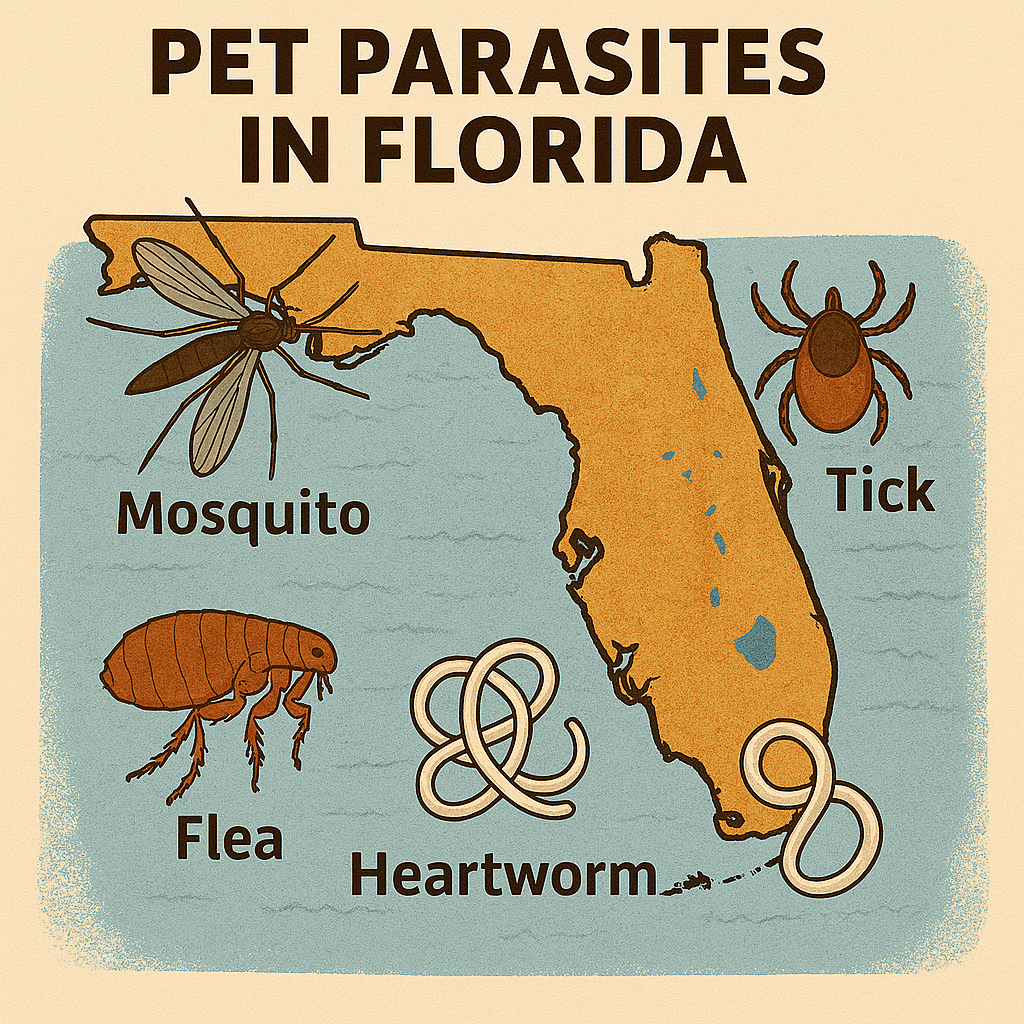
Parasites in Florida: Why Seasonal Prevention Is Not Enough A 2D digital illustr

In other regions of the country, freezing winter temperatures can halt parasite activity and reproduction. When this happens, pet parents may opt to pause their pet’s parasite prevention until spring. However, like the Florida sunshine, our region’s fleas, ticks, and mosquitoes are present—and multiplying—all year long.

In addition to warmth, our notorious humidity creates an ideal environment for parasites to breed. Moisture-rich air and standing water, combined with heat, contribute to high populations and rapid disease spread.

Florida parasites: Types and risks

Fleas

Tiny but relentless, fleas can cause intense itching, skin irritation, and allergic reactions in dogs and cats. Fleas also multiply quickly, with females laying dozens of eggs per day—often in the pet’s surroundings (i.e., your home). Once mature, fleas bite and feed on pets and people. Infected fleas can transmit tapeworms, an intestinal parasite that requires additional treatment. 

Ticks

Ticks are common in grassy or wooded areas, where they wait for warm-blooded passersby. These small hitchhikers often go unnoticed until they’re already attached—increasing the risk of disease transmission. Tick-borne diseases—including Lyme disease, Ehrlichiosis, and Anaplasmosis—are a significant concern for pets and people alike, as they affect quality of life and can require extensive treatment. 

Mosquitoes

Mosquitoes are a familiar sight and sound to many Floridians, but these pests are more than a nuisance. Infected mosquitoes can transmit heartworm disease to pets in a single bite, leaving unprotected dogs and cats vulnerable to a life-threatening infection. Although treatment is available for dogs, it is lengthy and expensive. Sadly, there is no treatment for heartworm disease in cats, who often develop a less obvious but equally harmful form of the disease. 

What happens when prevention is paused

Relentless parasites require consistent prevention. Missing even one dose can leave your pet unprotected and vulnerable to biting parasites. But that’s not all—parasite preventives also work by breaking the parasite life cycle. When a dose is missed, young heartworms in your pet’s bloodstream can continue to develop, and newly hatched fleas can feed on your pet and start reproducing. Both can quietly grow into much bigger problems before you’re even aware that a problem exists.

Year-round prevention also ensures you won’t forget to start again when spring arrives.

Indoor pets need year-round prevention, too

Parasites don’t stop at the front door or a closed window, especially here in Florida. Our balmy climate creates ideal conditions outside, where a parasite can hitch a ride on an indoor-outdoor pet or your clothing, shoes, or bags and be carried inside. Once indoors, these parasites can take up residence in your climate-controlled home while feeding on—and possibly infecting—unprotected pets.

Proactive prevention: The year-round recommendation

Year-round parasite prevention—including a flea and tick preventive and a heartworm preventive that includes protection against intestinal parasites—is now recommended for all pets throughout the U.S., by leading veterinary organizations, including:

In line with these recommendations and recognizing our subtropical climate, Tampa Bay Animal Hospitals strongly advocates year-round prevention for every dog and cat.

Partnering together to protect your pet

Fortunately, year-round prevention is easier and safer than ever. If your pet isn’t already on preventives, your veterinarian will work with you to determine which products suit your pet’s preferences, lifestyle, and health needs. Our preferred options for trusted, research-backed, year-round protection include:

For dogs:

  • Simparica Trio® – A monthly oral chewable tablet that protects against fleas, ticks, and heartworm disease.
  • Proheart 6 or 12 and Bravecto® Quantum – When paired together, these injectable medications provide up to 12-months of continuous protection against fleas, ticks, and heartworms. 

For cats:

  • Revolution® Plus – This monthly topical formula is easy to apply, stress-free, and delivers 30-days of protection against heartworm disease, fleas, ticks, ear mites, and some intestinal parasites.

Florida is proof that even paradise has its problems, but just because we share our environment with parasites doesn’t mean they have to compromise your pet’s health or comfort. Contact us to get your pet started with year-round prevention. 


Scroll To Top

You assessed your cat's body condition score (BCS) to be to be 3 out of 9.

What does this mean? The BCS is an assessment of your cat’s general body composition, including muscle and fat. While a score of 4 to 5 is ideal, a BCS of 3 indicates that your cat is thin.

What to do next: While thin cats are generally at lower risk for serious health issues compared to overweight cats, being underweight can lead to decreased muscle mass, malnutrition, and a weakened immune system. Unless there is an underlying reason for your cat’s thinness, the situation can often be improved with simple lifestyle adjustments, such as:

  • Offering a palatable diet recommended by your veterinarian
  • Feeding small, frequent meals
  • Stimulating the appetite by warming the food or introducing toppers
  • Minimizing stress
  • Weighing your cat monthly
  • Re-checking your cat's BCS at home
  • Staying alert to other health changes (especially continued weight loss and appetite loss)

Your cat's BCS provides valuable insights into their overall health and helps us spot potential issues early. While a BCS of 3 isn’t an immediate cause for concern, it’s a sign that small adjustments to their feeding and care routine could have a positive impact on their health.

Questions? We can help. Let’s work together to score a win for your cat's health.

You assessed your cat's body condition score (BCS) to be to be 6 out of 9.

What does this mean? The BCS is an assessment of your cat’s general body composition, including muscle and fat. While a score of 4 to 5 is ideal, a BCS of 6 indicates that your cat is borderline overweight.

What to do next: Simple daily actions can help prevent your cat from becoming overweight. Even a few extra ounces or pounds can significantly impact their health, increasing the risk of serious conditions like diabetes, arthritis, and kidney disease.

Restore your cat's future health by:

  • Feeding portioned meals (Your veterinarian can assist you with how much to feed)
  • Reducing stress by minimizing household changes and maintaining a routine
  • Decreasing boredom with interactive toys, social interaction, and cat furniture
  • Separating pets during meal time (Consider a microchip-linked feeder for multi-cat households)
  • Weighing them monthly
  • Re-checking your cat's BCS at home

Your cat's BCS is like a warning light for their future health. Taking proactive steps to address your cat’s weight can minimize future complications and help ensure they stay fit, agile, and healthy.

Curious about other ways to improve your cat’s BCS and overall well-being? Get in touch. Let’s work together to score a win for their health.

You assessed your dog's body condition score (BCS) to be to be 4-5 out of 9.

What does this mean? The BCS is an assessment of general body composition, including muscle and fat. On a scale of 1 to 9, with 1 being very thin and 9 being obese, your dog's score means they are at their ideal weight for optimal health and well-being!

What to do next: First, give your dog a scratch behind the ears to celebrate your success! Your commitment to their preventive health—regular vet visits, balanced nutrition, and consistent exercise—is truly paying off. But don’t relax just yet—maintaining a healthy BCS takes ongoing effort throughout your dog's life, including:

  • Feeding portioned meals
  • Avoiding high-calorie treats, diets, and people food
  • Staying active with regular exercise
  • Re-checking your pet’s BCS monthly at home
  • Staying on top of routine care (exams, screening tests) to ensure early detection of health changes

Just like your dog's vital signs, their BCS gives valuable insight into their overall health. Right now, we like what we see—and feel! But remember, supporting your dog's lifelong health is a team effort. By continuing the great work you’re doing and partnering with us, we can help ensure they stay healthy for years to come.

You assessed your cat's body condition score (BCS) to be to be 7-8 out of 9.

What does this mean? The BCS is an assessment of your cat’s general body composition, including muscle and fat. While a score of 4 to 5 is ideal, a BCS of 7-8 indicates that your cat is overweight.

What to do next: Weight issues are a common cause of many feline health problems, some of which can shorten a cat's life. Fortunately, with your dedication and our support, your cat can achieve better health, mobility, and an ideal body weight.

Rather than asking your cat to participate in daily exercise, feline weight loss emphasizes targeted nutrition and stress reduction to help them shed those unwanted pounds. This entails:

  • Offering a palatable weight-management diet recommended by your veterinarian
  • Feeding portioned meals (Your veterinarian can assist you with how much to feed)
  • Using a microchip-linked feeder for multi-cat households to ensure each cat consumes their veterinarian-recommended portion
  • Minimizing stress by maintaining a stable routine
  • Decreasing boredom through positive interactions such as interactive toys, food puzzles, cat-friendly furniture, and social bonding
  • Promoting movement with motion-activated food toys and puzzles
  • Weighing them monthly
  • Re-checking their BCS at home

Overweight cats not only face long-term health risks but can also suffer from discomfort and emotional stress. Intentional, veterinary-supervised changes can help ensure your cat’s fitness, comfort, and overall well-being for years to come. Let’s work together to score a win for your cat's health.

You assessed your dog's body condition score (BCS) to be to be 3 out of 9.

What does this mean? The BCS is an assessment of general body composition, including muscle and fat. While a score of 4 to 5 is ideal, a BCS of 3 indicates that your dog is thin.

What to do next: Although a lean body condition is healthier than being overweight, thinness can indicate muscle loss, health changes, or a lack of appropriate nutrition. Here are a few ways to help your dog reach their optimal weight and health:

  • Follow any recommendations given by your vet (these are personalized for your dog's unique needs)
  • Gradually transition your dog to a calorie-dense diet
  • Weigh them monthly
  • Re-check their BCS at home
  • Provide regular moderate exercise to build healthy muscle
  • Monitor them for other health changes (appetite loss, vomiting, unusual stools, fatigue, etc.)

Just like your dog's vital signs, their BCS gives valuable insight into their overall health and can help identify potential issues early. While a BCS of 3 isn't a serious concern, it suggests that your dog may benefit from adjustments to their diet and exercise routine. Please continue to monitor your dog for any other health changes—including difficulty gaining weight—as these could indicate the need for further evaluation. Let’s work together to help your dog achieve better health, so you can make the most of every moment together.

Now that’s a perfect score.

You assessed your dog's body condition score (BCS) to be to be 9 out of 9.

What does this mean? The BCS is an assessment of general body composition, including muscle and fat. While a score of 4 to 5 is ideal, a BCS of 9 indicates that your dog is obese (weighing 20% or more above their ideal weight).

What to do next: Dogs with obesity are in significant danger of many life-altering health conditions, including arthritis, cardiovascular problems, kidney disease, and cancer. Reducing your dog's weight and improving their body condition is critical to restoring their comfort, mobility, health, and longevity.

Take action today to protect your dog's  health by:

  • Following any veterinarian’s recommendations (these are personalized to your dog's unique needs)
  • Using a measuring cup to portion meals
  • Removing uneaten food after 20 minutes
  • Limiting treats to low-calorie fruits or vegetables
  • Exercising daily for at least 30 minutes (leash walks are a great way to start)
  • Weigh them  monthly
  • Re-check their BCS at home

Just like your dog's vital signs, their BCS gives valuable insight into their overall health. In your dog's case, it’s a signal for immediate action.

By following the steps above and your veterinarian’s recommendations, getting your dog back to a healthy weight is possible, but it will take time and effort. That’s why we’re here to help you every step of the way.

Let’s work together to score a WIN for Sydney’s health.

You assessed your cat's body condition score (BCS) to be 1–2 out of 9.

What does this mean? The BCS is an assessment of your cat’s general body composition, including muscle and fat. While a score of 4 to 5 is ideal, a BCS of 1 to 2 indicates that your cat is very thin, at least 20% below their ideal weight. This may be caused by poor nutrition or an underlying illness.

What to do next: Since a BCS of 1 to 2 can indicate potential health concerns, your cat's veterinarian may suggest blood work or other tests.

In addition to following any plan outlined by your cat's veterinarian, the following steps may help them achieve their ideal weight and BCS:

  • Offering a palatable diet recommended by your veterinarian
  • Feeding small, frequent meals
  • Warming the food or introducing toppers
  • Feeding pets separately
  • Minimizing stress
  • Weighing them  monthly
  • Re-checking their BCS at home
  • Watching for other concerning signs, such as loss of appetite, vomiting, or changes in litter box habits, as these may require prompt veterinary care.

Just like your cat's vital signs, their BCS offers important insight into their overall health. While a BCS of 1 to 2 can be concerning, we’ll work together to help your cat safely achieve their optimal weight and vitality.

You assessed your dog's body condition score (BCS) to be to be 6 out of 9.

What does this mean? The BCS is an assessment of general body composition, including muscle and fat. While a score of 4 to 5 is ideal, a BCS of 6 indicates that your dog is borderline overweight.

What to do next: With just a few pounds separating your dog from being overweight, a BCS of 6 is a clear call to action! Excess weight can increase their risk for serious health problems, such as arthritis, heart disease, and even cancer, and studies have shown that it can shorten their lifespan.

Here are a few ways to help Gigi reach their ideal weight:

  • Follow any recommendations given by your veterinarian (these are personalized for your dog's unique needs!)
  • Use a measuring cup to portion meals
  • Don’t leave food out all day
  • Weigh them monthly
  • Re-check their BCS at home
  • Provide regular moderate exercise to build healthy muscle

Just like your dog's vital signs, their BCS gives valuable insight into their overall health and and can help identify potential issues early. While a BCS of 6 isn't dangerous, it does raise their risk for many life-altering conditions and signals a need for change.

Let’s work together to help your dog achieve a better BCS and overall wellness, so you can make the most of every moment together.

Now that’s a perfect score!

You assessed your dog's body condition score (BCS) to be to be 7-8 out of 9.

What does this mean? The BCS is an assessment of general body composition, including muscle and fat. While a score of 4 to 5 is ideal, a BCS of 7 to 8 indicates that your dog is overweight.

What to do next: Your dog's weight is putting them at an increased risk for many serious conditions, including arthritis, diabetes, cancer, and heart disease. Overweight dogs are also clinically shown to have a shorter lifespan and a reduced quality of life.

Thankfully, it’s not too late to get back on track! Here are some simple steps to help your dog achieve a better BCS and a healthier life:

Here are a few ways to help them reach their ideal weight:

  • Reduce meal portions by 10% to 20%
  • Use a measuring cup for accuracy
  • Switch to a weight management diet
  • Swap treats for low-calorie fruits and veggies
  • Increase daily walks and playtime
  • Use a food-dispensing toy instead of a bowl to encourage movement
  • Weigh them monthly
  • Re-check their BCS at home

Just like your dog's vital signs, their BCS gives valuable insight into their overall health and quality of life. The actions you take in the days, weeks, and months ahead can help them slim down, restore their well-being, and allow you both to make the most of every moment together.

Let’s work together to score a WIN for your dog's health and happiness.

Now that’s a perfect score!

You assessed their body condition score (BCS) to be to be 9 out of 9.

What does this mean? The BCS is an assessment of your cat’s general body composition, including muscle and fat. While a score of 4 to 5 is ideal, a BCS of 9 indicates that your cat is obese (20% or more over their ideal body weight).

What to do next: Cats with obesity are in a health crisis. Excess weight strains their joints, leading to painful and decreased mobility. In addition, abundant fat tissue increases their risk for life-altering diseases like diabetes, arthritis, kidney disease, heart disease, and cancer.

Let their BCS be a turning point in their health.

With simple lifestyle changes and guided support from our team, we can restore your cat's quality of life and help them lose those unnecessary pounds.

We’ll focus on nutrition and stress reduction to create positive results. This includes:

  • Offering a palatable weight-management diet recommended by your veterinarian
  • Feeding portioned meals (Your veterinarian can assist you with how much to feed)
  • Using a microchip-linked feeder for multi-cat households to ensure each cat consumes their veterinarian-recommended portion
  • Minimizing stress in your cat’s environment
  • Decreasing boredom through positive interactions (interactive toys, food puzzles, cat-friendly furniture, and social bonding)
  • Encouraging healthy movement and exploration (motion-activated toys, food puzzles, ramps to perches, scratching posts, cat tunnels)
  • Weighing them monthly
  • Re-checking their BCS at home

Your cat’s body condition is a key factor in their health and longevity. Together, we can score a victory by helping them lose weight and reclaim their health, happiness, and mobility.

You assessed your cat's body condition score (BCS) to be 4-5 out of 9.

What does this mean? The BCS is an assessment of your cat’s general body composition, including muscle and fat. On a scale of 1–9, with 1 being very thin and 9 being obese, this score means they are at their ideal weight for optimal health and well-being!

What to do next: First, give your cat a head bump or a scratch to celebrate your success! Your dedication to their overall health—through regular vet visits, balanced and portion-controlled nutrition, a low-stress environment, and plenty of physical and mental activity—is truly paying off.

But don’t relax just yet—maintaining your cat’s healthy BCS will take ongoing effort throughout their lifetime. Keep up the good work by:

  • Minimizing stress
  • Creating a mentally and physically stimulating environment
  • Satisfying your cat’s social needs with one-on-one time
  • Encouraging movement with interactive toys, perches, and furniture
  • Feeding measured portions of a veterinarian-recommended, high quality, palatable diet
  • Checking your cat’s BCS monthly at home
  • Staying on top of routine veterinary care

Just like your cat's vital signs, their BCS gives us valuable insight into their overall health. Right now, we like what we see—and feel! But remember, supporting your cat's lifelong health is a team effort. By continuing the great work you’re doing and partnering with us, we can help ensure they stay healthy for years to come.

You assessed your dog's body condition score (BCS) to be 1–2 out of 9.

What does this mean? The BCS is an assessment of general body composition, including muscle and fat. While a score of 4 to 5 is ideal, BCS of 1 to 2 indicates that your dog is very thin, at least 20% below their ideal weight. This may be caused by poor nutrition or an underlying illness.

What to do next: Since a BCS of 1 to 2 can indicate potential health concerns, your dog's veterinarian may suggest  blood work or other tests.

If no issues are found, the following steps may help your dog achieve their ideal weight and BCS:

  • Gradually transitioning them to a calorie-dense diet
  • Feeding more frequent meals
  • Weighing them monthly
  • Re-checking their BCS at home
  • Providing regular moderate exercise to build healthy muscle
  • Monitoring them for other health changes (appetite loss, vomiting, unusual stools, fatigue, etc.)

Just like your dog's vital signs, their BCS offers important insight into their overall health and can serve as an early warning that something may be wrong. While a BCS of 1 to 2 can be concerning, please know that your pet's well-being is our top priority. Let’s work together to help your pet pal achieve better health, so you can make the most of every moment together.